
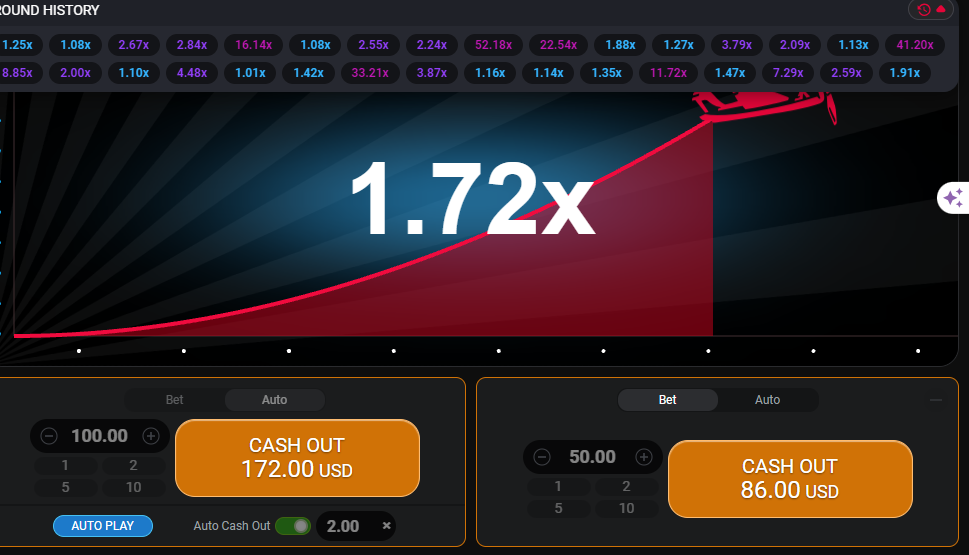
Let me paint you a picture of aviator game strategy.
You’re watching that little plane climb. 1.2x… 1.8x… 3.4x… Your palms are sweating. Everyone in the chat is screaming “cash out!” and you’re sitting there, frozen, half convinced this is the round where it hits 50x. Then — crash — the plane is gone. So is your money.
Sound familiar? Yeah. We’ve all been there.
Aviator is probably the most addictive crash game to ever grace a betting app in India. It’s simple, it’s fast, and it’s got this cruel way of making you feel like you were this close every single round. But here’s the thing nobody tells you upfront: feeling close and actually winning are two very different things. And the gap between them? That’s where strategy lives.
This guide is your roadmap. Whether you’re brand new to crash games or you’ve been playing for months and still can’t figure out why your bankroll keeps shrinking — this is for you.
What Even Is Aviator? (Quick Refresher Before We Get Into Aviator Game Strategy)
Aviator is a crash game developed by Spribe. Each round, a plane takes off and a multiplier climbs from 1x upward. You place your bet before the round starts, and you have to cash out before the plane flies away (crashes). The longer you wait, the higher the multiplier — but if you wait too long and the plane crashes, you lose your bet.
The game uses provably fair RNG (Random Number Generator), meaning every crash point is determined by a cryptographic algorithm before the round even begins. There’s a 97% RTP (Return to Player), which sounds great until you realize that 3% house edge compounds relentlessly over thousands of rounds.
No skill can override pure math. But smart play? That can absolutely change how long you last — and how much fun you have doing it.
Is There a “Best” Aviator Game Strategy?
Honestly? No single strategy is definitively “the best.” Anyone who tells you otherwise is either selling something or hasn’t played long enough.
What does exist are strategies that are better suited to different goals, budgets, and risk tolerances. Some people want to grind steady small wins. Others want to chase that 20x rush. Most want something in between.
Here are the main schools of thought, broken down clearly:
1. The Low-Risk Auto-Cashout Aviator Strategy (1.2x–1.5x)
This is the safest Aviator betting strategy you’ll find, and it’s the one most beginners should start with.
How it works:
- Set your auto-cashout to 1.2x or 1.5x before each round
- Place consistent flat bets (same amount every round)
- Let the auto-cashout do its job — no emotion, no hesitation
Why it works (kind of): The plane crashes below 1.5x roughly 40% of the time, but when it doesn’t, you’re collecting small, predictable wins. Over time, in a favorable streak, this can keep your bankroll afloat.
The honest truth: At 1.2x, you win 80p for every ₹1 bet. One loss wipes out several wins. You need a very long winning streak to make meaningful profit, and the RNG doesn’t care about your feelings.
Best for: Players who want extended sessions without blowing their budget too fast. Think of it like playing defense — you’re not winning big, you’re just not losing fast.
2. The Double-Bet Strategy (Aviator Game Strategy)
This one’s clever. It uses two simultaneous bets to hedge your risk.
How it works:
- Bet 1: Small amount (e.g., ₹50) with auto-cashout at 1.2x–1.5x (safe bet)
- Bet 2: Larger amount (e.g., ₹200) with auto-cashout at 5x–10x (risk bet)
The idea is that your safe bet almost always cashes out quickly, recouping part of your stake. Your risk bet either hits big or dies — but you’ve partially cushioned the blow.
Why Indian players love this: It scratches both itches. You get the comfort of consistent small returns AND the dopamine hit of occasionally landing a big multiplier. Best of both worlds, at least in theory.
Watch out for: If the plane crashes below 1.2x (yes, it happens), both bets lose simultaneously. Double the pain.

3. The Martingale Aviator Game Strategy (High Risk, High Reward)
Ah, Martingale. The strategy that has ruined more bankrolls than we care to count — and occasionally, occasionally, produced spectacular comebacks.
How it works:
- Start with a base bet (e.g., ₹100)
- Every time you lose, double your bet
- When you finally win, you recover all losses plus a small profit
- Reset to your base bet and start again
Example:
| Round | Bet | Result | Running P/L |
|---|---|---|---|
| 1 | ₹100 | Loss | -₹100 |
| 2 | ₹200 | Loss | -₹300 |
| 3 | ₹400 | Loss | -₹700 |
| 4 | ₹800 | Win (1.2x) | +₹160 net |
The brutal reality: A run of 6-7 consecutive losses — which is more common than you’d think — can wipe out your entire bankroll before you get a chance to recover. At round 8, you’d be betting ₹25,600 just to win back your original ₹100 base.
Use it if: You have a deep bankroll, strong discipline, and clear stop-loss limits. Never chase with money you can’t afford to lose.
4. The Fibonacci Aviator Betting System
Gentler than Martingale but still progressive. Instead of doubling, you follow the Fibonacci sequence (1, 1, 2, 3, 5, 8, 13, 21…).
How it works:
- Move one step forward in the sequence after a loss
- Move two steps back after a win
The appeal: Your bets escalate slower than Martingale, so you have more runway before hitting dangerous territory. Still a negative progression system, still carries real risk.
Best for: Players who like Martingale logic but want a slightly more conservative climb.
5. The Staircase (1326) Aviator Betting System
This one’s a positive progression — meaning you increase bets after wins, not losses. Named after the betting sequence: 1, 3, 2, 6 units.
How it works:
- Win → follow the sequence forward
- Lose at any step → reset to 1
Why it’s interesting for Aviator: You’re only risking winnings, not your base capital. If you string together a nice hot streak, you maximize gains. If you lose, you’ve only given back what you just won.
The catch: You need four consecutive wins to complete the cycle. In a crash game with unpredictable multipliers, that’s easier said than done.
6. The Moderate-Risk 2x or 3x Aviator Strategy
Somewhere between safe and reckless lies the 2x–3x cashout zone — arguably the sweet spot for most Indian players.
How it works:
- Auto-cashout set between 2x and 3x
- Flat or mildly progressive betting
The logic: The plane reaches 2x roughly 50% of the time. At 3x, it’s around 33%. These multipliers hit often enough to make sessions interesting, but rarely enough to keep you on your toes.
Recommended bankroll: At least 20–30x your per-round bet. So if you’re betting ₹100 per round, have ₹2,000–₹3,000 ready for a session.
Can You Predict Aviator Patterns Using Aviator Game Strategy?
Short answer: Yes.
Longer answer: Also no, but let’s talk about why people think you can.
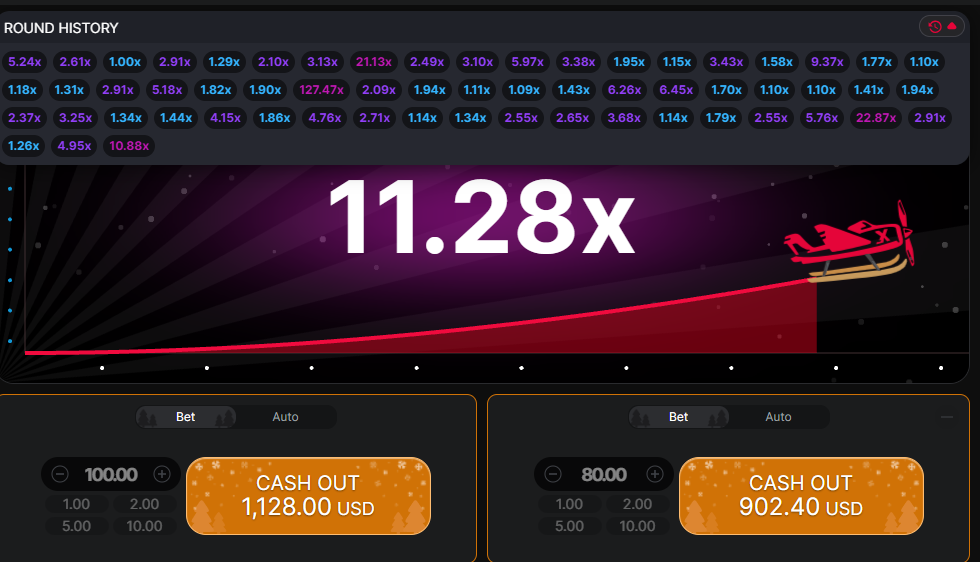
Aviator’s interface shows a history of recent multipliers in color-coded bubbles — blue for low, pink for medium, purple for high. This creates the illusion of a “pattern.” Players start tracking sequences, waiting for a “hot” round after a string of crashes.
This is called the Gambler’s Fallacy — the mistaken belief that past random events influence future ones. They don’t. Each round is completely independent. The algorithm doesn’t “owe” you a 10x after five crashes.
Are there predictor tools and bot services claiming to forecast Aviator multipliers? Yes, absolutely. Many are sold via Telegram groups and third-party apps. And while channels like Aviator Signal Bot do exist for community strategy signals, no software can beat a true RNG. If someone claims a 100% winning strategy — that’s not a strategy, that’s a sales pitch.
Use signals and community insights as supplementary context, not as gospel.
How Much Should You Bet Per Round Aviator Strategy?
This is bankroll management 101, and it’s the most underrated part of any Aviator game strategy.
The golden rule: Never bet more than 1–5% of your total bankroll per round.
| Bankroll | 1% Bet | 2% Bet | 5% Bet |
|---|---|---|---|
| ₹500 | ₹5 | ₹10 | ₹25 |
| ₹1,000 | ₹10 | ₹20 | ₹50 |
| ₹5,000 | ₹50 | ₹100 | ₹250 |
| ₹10,000 | ₹100 | ₹200 | ₹500 |
Flat betting (same amount every round) is safer than progressive systems for most players. It limits downside while still allowing you to benefit from hot streaks.
How Long Should You Play in One Session?
Here’s where most people go wrong. They don’t have an exit plan.
Set these three limits before you start:
- Stop-loss limit — The maximum you’re willing to lose in a session. Once hit, you stop. No exceptions. A common rule is 20–30% of your session bankroll.
- Win goal — A profit target. Once you’ve hit it, you walk away. Greedy players give back everything they won because they “just want one more round.”
- Time limit — Cap your sessions at 30–60 minutes. Decision fatigue is real. After an hour, your judgment deteriorates and impulsive bets increase.
Short, disciplined sessions beat long, emotional ones every single time.
Aviator Demo Mode: Practice Before You Pay
Most platforms offering Aviator — including Betwinner and others — have a demo/free play mode. Use it.
Seriously. Before you put real money on the table:
- Test your auto-cashout thresholds
- Practice the double-bet setup
- Get a feel for how often the plane crashes below your target multiplier
- Track your “theoretical” results over 50–100 rounds
You’ll learn more in 20 minutes of demo play than from reading 10 strategy guides.
The Aviator Strategy That Works Best for Beginners
If you’re just starting out, here’s the single best approach — no complexity, no drama:
- Use demo mode for 50 rounds first
- Start with a small bankroll (₹500–₹1,000)
- Set auto-cashout at 1.5x on a flat, consistent bet
- Set a stop-loss of 30% of your session bankroll
- Set a win goal of 50% above your starting amount
- Walk away when either limit hits
It’s not glamorous. It won’t make you rich overnight. But it will keep you in the game longer, give you time to learn the mechanics, and protect you from the crushing losses that end most beginners’ interest in the game.
FAQ: Your Aviator Strategy Questions, Answered
Is there a 100% winning Aviator strategy?
No. Anyone claiming 100% wins is either lying or hasn’t experienced a losing streak yet. The game has a built-in 3% house edge powered by RNG. No strategy eliminates that — the best you can do is manage your exposure intelligently.
Which is better: low risk or high risk Aviator strategy?
Depends entirely on your goals. Low-risk (1.2x–1.5x) extends your session and protects your bankroll but limits upside. High-risk (5x–20x) offers bigger wins but far more variance. For most Indian players, a moderate 2x–3x approach balances both.
Does the Aviator game algorithm allow any advantage?
No. The algorithm is provably fair, meaning the crash point is determined by a cryptographic hash before each round begins and can be verified afterward. It cannot be predicted or manipulated.
Should I use an Aviator predictor or pattern tool?
Community signal channels can be part of your research, but no tool can predict an RNG outcome. Treat signals as conversation starters, not trading advice.
How do I combine Martingale with Aviator safely?
Use a low base bet, set a strict loss limit (e.g., stop after 5 doublings), and only use money you’re fully comfortable losing. Never martingale into rent money territory.
Final Thoughts: Fly Smart, Not Fast
Look, I’m not going to pretend Aviator is some beatable puzzle if you just find the right formula. It’s not. The house always has an edge, and in a crash game, that edge can move fast.
But here’s what is in your control: your bet size, your cashout timing, your session length, and your emotional state. Master those four things and you’re already playing smarter than 80% of the people in that chat.
The difference between a casual player and a strategic one isn’t secret knowledge — it’s discipline. Set your limits. Use auto-cashout. Don’t chase. And for the love of everything, use demo mode before you go in with real money.
If you’re serious about leveling up, check out the Aviator Signal Bot community on Telegram for real-time signals and player strategy discussions. And explore resources like the Primedope Aviator Guide for deeper odds analysis.
Now go play smart. The plane’s about to take off.
Disclaimer: Aviator is a game of chance. All strategies carry risk, and no outcome is guaranteed. Play responsibly, set limits, and never wager more than you can afford to lose. If gambling is affecting your wellbeing, seek support.