Search for “Aviator strategy” and you’ll find many confident promises: secret multipliers, signal groups, and systems. This guide takes a different approach. It compares the most popular Aviator betting strategies using the actual math, shows what each one really does, and tells you plainly which ones deserve your caution.
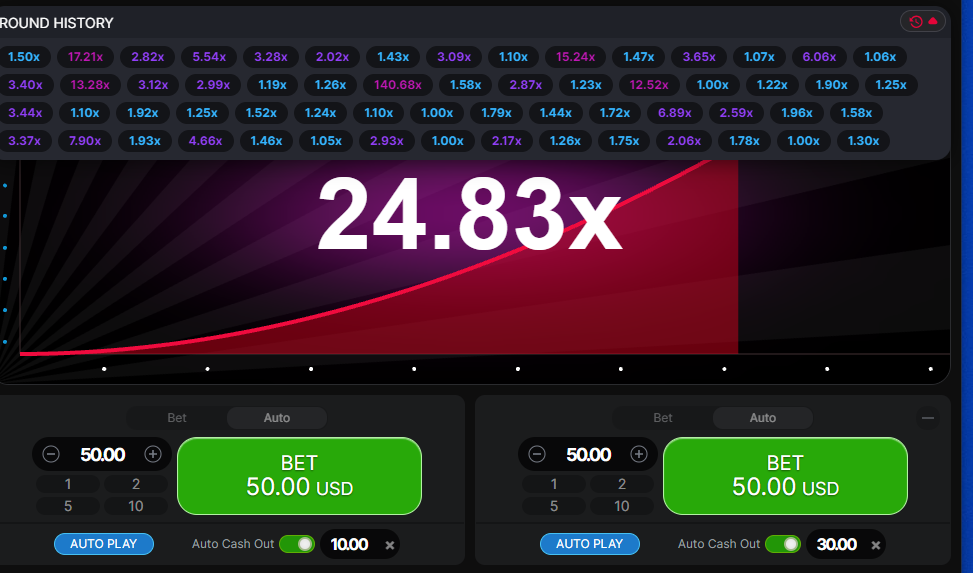
Here is the key point up front. Aviator publishes a return-to-player (RTP) of about 97%. Over a very large number of rounds, the game keeps roughly 3% of everything wagered. Every round is independent, and no betting pattern can change that. So no strategy can turn Aviator into a reliable profit machine.
What strategies can change is the shape of your results: how often you win, how big wins and losses are, how fast your bankroll moves and how long your session lasts. Understanding those trade-offs helps you choose a style that fits your budget and keeps the game under control.
How Aviator Math Works (The 60-Second Version)
You need two numbers to compare any strategy.
Payout: stake × cash-out multiplier. A $2 stake cashed out at 1.50x returns $3.
Approximate win probability: With a 97% RTP, the chance the plane reaches a given multiplier is roughly 97% divided by that multiplier. These are theoretical approximations, not guarantees for any single session.
| Cash-out target | Approx. chance of winning a round | Profit on a $2 stake |
|---|---|---|
| 1.20x | ~81% | $0.40 |
| 1.50x | ~65% | $1.00 |
| 2.00x | ~48.5% | $2.00 |
| 5.00x | ~19% | $8.00 |
| 10.00x | ~9.7% | $18.00 |
Multiply the win chance by the payout and subtract the loss chance times your stake, and every row lands at the same place: an expected loss of about 3 cents per dollar staked. Low targets and high targets differ in volatility, not in expected return. That is the foundation for everything below.
Strategy 1: Flat Betting With a Low Target
How it works: You bet the same small amount every round and cash out early, usually between 1.20x and 1.50x.
Example: $1 stake, 1.30x target. You win about 74% of rounds for roughly $0.30 profit each, and lose $1 on the rest.
Pros
- Frequent wins make sessions feel smooth.
- Small, predictable swings are easy to budget.
- Works well with auto cash out, removing hesitation.
Cons
- One loss wipes out several wins. At 1.30x, you need about three wins to recover a single loss.
- The 3% house edge still applies, so slow, steady grinding still loses over time.
Best for: Beginners and anyone who wants long, low-stress sessions.
Strategy 2: Flat Betting With a Mid Target (Around 2x)
How it works: Same stake every round, with an auto cash-out near 2.00x.
Example: $1 stake at 2.00x. You win roughly one round in two, with each win returning $1 profit.
Pros
- Easy to track: wins and losses are the same size.
- Simple “coin-flip” feel and clean math.
Cons
- Streaks of five or six losses in a row are normal, not rare. Over 100 rounds, a six-round losing streak is quite likely.
- Variance is higher than at low targets.
Best for: Players who want balance between win frequency and payout size.
Strategy 3: High-Multiplier Hunting
How it works: You place small stakes and aim for 5x, 10x or more, accepting many losses for the chance of one big hit.
Example: $0.50 stake at 10x. You win about 1 round in 10, for $4.50 profit each time, and lose $0.50 on the other nine.
Pros
- Small stakes limit losses per round.
- The occasional large win is exciting.
Cons
- Long dry spells are normal. You can go 30 or more rounds without a win.
- Because wins are rare, it’s easy to chase losses by raising stakes.
- Bankroll drains steadily between wins.
Best for: Players who treat it as a lottery-style entertainment bet with a very small, fixed budget.
Strategy 4: The Two-Bet Hedge
How it works: Aviator lets you place two bets in a round. A common setup pairs a safer bet with a high-risk bet.
Example: Bet A: $2 at 1.50x. Bet B: $1 at 5.00x.
- Plane reaches 1.50x but not 5x: Bet A wins $1, Bet B loses $1. Net $0.
- Plane reaches 5x: Bet A wins $1, Bet B wins $4. Net +$5.
- Plane crashes below 1.50x: both lose. Net −$3.
Pros
- Smooths results and gives you a path to big wins.
- Lets you “cover” part of your stake.
Cons
- It’s not a hedge in the financial sense. Both bets lose together if the plane flies away early.
- You’re staking more per round than the headline number suggests.
- The combined expected value is still negative.
Best for: Players who enjoy a balance of safety and upside, provided they count the total stake as the round’s risk.
Strategy 5: Martingale (Doubling After Losses)
How it works: After each loss, you double your stake so the next win recovers all prior losses plus one base unit.
Example: $1 base stake at 2.00x. Sequence after losses: $1, $2, $4, $8, $16, $32.
The problem is bankroll math. Six losses in a row cost $63, and the next bet would be $64, requiring a total of $127. With a $100 bankroll, you can’t place that seventh bet. The chance of losing six rounds in a row at a 2x target is about 1.9% (roughly 51.5% loss chance per round, six times in a row). That sounds small, but across 50 cycles the chance of hitting at least one such streak is around 60%. You’ve been winning $1 per cycle, and one bad streak takes back $63 or more.
Pros
- Many small wins create a feeling of control.
Cons
- Tiny profits against catastrophic losses.
- Needs unlimited bankroll to work in theory, and game or table limits make that impossible.
- Doesn’t change the house edge. It just hides the risk until it arrives.
Verdict: The most seductive and most dangerous strategy on this list. Treat it as a risk to avoid, not a method to master.
Strategy 6: Positive Progression (Paroli-Style)
How it works: Increase your stake only after a win, then reset after a loss or a set number of wins.
Example: $1 stake at 2x. Win, then bet $2. Win again, bet $4. After three wins in a row, reset to $1. After any loss, reset to $1.
Pros
- Losses stay small, because stakes rise only when you’re playing with winnings.
- Gives you a clear rule for when to take profit.
Cons
- Three wins in a row at 2x happens roughly 11% of the time, so the “big” payoff is rare.
- Still has negative expected value.
Best for: Disciplined players who want a structured way to limit damage while still chasing a streak.
Strategy 7: Percentage-of-Bankroll Staking
How it works: Each stake is a fixed percentage (commonly 1–2%) of your current bankroll. As the bankroll shrinks, bets shrink. As it grows, they grow.
Example: $100 bankroll, 1% stake = $1. After losses leave you with $80, the next stake is $0.80.
Pros
- Makes total ruin mathematically very slow, since you never bet everything.
- Builds in automatic risk reduction after losses.
Cons
- It controls how fast you lose, but doesn’t reverse the house edge.
- Requires you to recalculate stakes regularly.
Best for: Anyone, as a foundation for any other strategy.
Strategy 8: Session Rules (Stop-Loss and Take-Profit)
This is less a betting pattern than a discipline layer. You set rules before you play:
- Stop-loss: Quit when you lose a set amount (for example, 15% of the session bankroll).
- Take-profit: Quit when you’re up by a set amount (for example, 25%).
- Time limit: Quit after a fixed number of minutes.
Pros
- It’s the only approach that lets you walk away with a profit, since the house edge grinds against you the longer you play.
- Protects you from tilt and chasing losses.
Cons
- Requires real willpower, which is why many players skip it.
Verdict: The most useful rule set in this article. Combine it with any strategy above.
Strategies to Try
Signal channel. Because each round is random and generated by a provably fair system, you need a community where they share good signals to keep you profitable. The best telegram channel that provides signals is aviator signal bot.
“Hack” or bot software. The best bot software are the ones found on this website just click the button on this post to get access. Never download or share account details with any untrusted software.
Pattern spotting from round history. The history strip is a record, to help you make informed decisions. A run of low crashes doesn’t make a high one “due. However you can use aviator profit system to help you track rounds
Guaranteed-win systems sold for a fee. If a system truly beat the game, its seller wouldn’t need to sell it.
Strategy Comparison Table
| Strategy | Typical target | Win frequency | Volatility | Bankroll risk | Verdict |
|---|---|---|---|---|---|
| Flat, low target | 1.20x–1.50x | High (65–80%) | Low | Low-moderate | Good for beginners |
| Flat, mid target | ~2.00x | ~48% | Moderate | Moderate | Balanced |
| High-multiplier hunting | 5x–10x+ | Low (10–20%) | Very high | Moderate if stakes are tiny | Entertainment only |
| Two-bet hedge | Mixed | Mixed | Moderate | Higher (two stakes) | Count both stakes |
| Martingale | Usually 2x | ~48% per round | Extreme | Very high | Avoid |
| Positive progression | ~2x | ~48% per round | Moderate-high | Low-moderate | Structured option |
| % of bankroll | Any | Any | Depends | Controlled | Best foundation |
| Stop-loss / take-profit | Any | Any | Depends | Controlled | Essential |
Which Strategy Should You Choose?
There is no best strategy, only the best match for your goals.
- If you want long sessions on a small budget: flat betting at a low target, with a stop-loss.
- If you want balance: flat betting near 2x, with a percentage-of-bankroll stake.
- If you want occasional thrills: small high-multiplier stakes, treated as a fixed entertainment cost.
- If you want structure: positive progression with a firm reset rule.
- If you’re tempted by Martingale: pick a different one.
Whatever you choose, test it in demo mode first. Many operators offer a free version, and a few hundred practice rounds teach you more about variance than any article can.
A Realistic Bankroll Example
Say you set aside $50 for a month of entertainment. A sensible plan might be:
- Stake: $0.50 per round (1% of the bankroll).
- Target: 1.50x with auto cash out.
- Stop-loss: $7.50 per session (15%).
- Take-profit: $12.50 per session (25%).
- Review: log every session and check the total at month-end.
This plan doesn’t promise profit. It keeps your spending predictable and makes it easy to stop. If the $50 is gone, the entertainment budget is finished until next month. The budget never rises to “win it back.”
Frequently Asked Questions
What is the best Aviator strategy?
No strategy beats the house edge. The best approach is one that matches your budget and temperament: small stakes, a fixed target, and firm stop-loss and take-profit limits.
Does Martingale work in Aviator?
It produces many small wins until a losing streak arrives, and then the losses can be large enough to end your bankroll. It doesn’t change the odds, and it’s widely considered one of the riskiest approaches.
Is cashing out early better than waiting for high multipliers?
Neither has a better expected return. Early cash-outs win more often with small profits. Late cash-outs win rarely with large profits. The difference is volatility, not value.
Can I predict when the plane will crash?
No. Each round is independent and random, and the game uses provably fair technology. Prediction tools and signal groups cannot forecast outcomes.
Does auto cash out improve my odds?
It doesn’t change the odds, but it removes hesitation and slow-click errors, which helps you follow your plan.
How much should I stake per round?
Many disciplined players use 1–2% of their session bankroll. For a $50 bankroll, that’s $0.50 to $1.00.
What if I keep losing?
Stop. Use your operator’s deposit limits and self-exclusion tools, talk to someone you trust and contact a local support service if gambling is causing stress or money problems.
Conclusion
Aviator strategies differ in how they distribute wins and losses, not in whether they beat the game. Flat betting at low targets gives smooth sessions, high-multiplier hunting gives rare thrills, the two-bet setup mixes both, and Martingale hides serious risk behind small wins. The tools that matter most are the unglamorous ones: small stakes, a percentage-of-bankroll rule, a stop-loss, a take-profit and a willingness to walk away.
Play only on licensed platforms, practise in demo mode and treat every dollar staked as the cost of entertainment, not an investment.
Keep reading:
Pingback: How to Play Aviator Game: A Step-by-Step Beginner’s Guide - Aviator Masterclass