The Aviator game on 1xBet is a crash game. You place a bet, a plane takes off, and a multiplier climbs. You win if you cash out before the plane flies away. You lose your stake if you wait too long.
No strategy can predict when the plane will leave. What you can do is understand the mechanics, set limits, and make calm decisions. This guide covers how to play Aviator on 1xBet, how the multiplier and cash-out work, the strategies players commonly use (with honest pros and cons), and how to protect your bankroll.
Aviator is for adults only (18+, or the legal age in your country). Only play with money you can afford to lose.
What Is the Aviator Game?
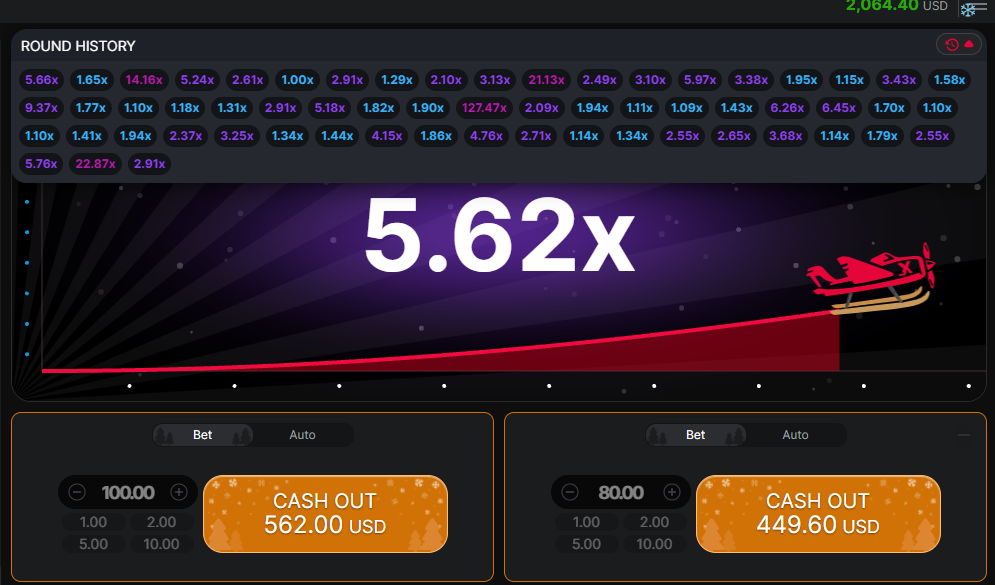
Aviator is an online crash game developed by Spribe. It is very simple, which is why it became popular so quickly.
Here is how a round works:
- The plane: A small red plane takes off on your screen.
- The multiplier: As it climbs, a number rises: 1.00x, 1.25x, 2.00x, and so on.
- Betting: You place your stake before the round begins.
- Cashing out: You tap the cash-out button at any moment while the plane is flying. Your payout is your stake multiplied by the current multiplier.
- Losing: If the plane disappears before you cash out, you lose the stake.
A simple example: You bet $10. The plane climbs to 2.00x and you cash out. You receive $20 ($10 stake plus $10 profit). If you had waited and the plane crashed at 2.30x, you would have got nothing.
The plane can crash at 1.00x, which is an instant loss. It can also climb past 50x or 100x, though that is rare.
How to Play Aviator on 1xBet
The exact layout can differ by country, device, and app version, so treat these steps as a general guide.
- Access the platform. Open the official 1xBet website or app. Make sure you use the official source, and create or log in to your account.
- Find Aviator. Look in the casino or games section, or use the search bar and type “Aviator.” Some versions also list it under instant or crash games.
- Select your stake. Enter the amount you want to bet. Start small while you learn.
- Start the round. Confirm your bet before the countdown ends. If you miss the window, you wait for the next round.
- Watch the multiplier. The number rises as the plane flies. It can rise slowly or crash almost immediately.
- Cash out. Tap the cash-out button before the plane flies away. The payout is credited to your balance.
- Understand the result. Cash out in time and you win stake × multiplier. Miss it and you lose the stake. Each round is independent.
- Explore other crash games. 1xBet also offers other crash-style and instant games. The selection changes, so check the games section of your version. Each game has its own rules, so read them before you bet.
Tip: Try the demo mode if one is available in your region. It lets you learn the controls without risking money.
How Does the Aviator Multiplier Work?
The multiplier decides your payout. Your total payout = stake × multiplier at cash-out.
| Stake | Cash-out multiplier | Total payout | Profit |
|---|---|---|---|
| $1,000 | 1.10x | $1,100 | $100 |
| $1,000 | 1.50x | $1,500 | $500 |
| $1,000 | 2.00x | $2,000 | $1,000 |
| $1,000 | 5.00x | $5,000 | $4,000 |
| $1,000 | 10.00x | $10,000 | $9,000 |
| $1,000 | Crash before cash-out | $0 | –$1,000 |
A higher multiplier means a bigger payout. It also means the plane has to stay in the air longer, which happens less often. The game’s payout balance is built so that you are trading risk for reward. Aim higher and you win less often but win more when you do.
Spribe publishes a return-to-player (RTP) figure of around 97% for Aviator. Verify the current figure on Spribe’s or 1xBet’s official pages before quoting it. An RTP below 100% means the game is built to return less to players than they stake over a very large number of rounds.
How To Win at Aviator
You can win individual rounds. Anyone can cash out at 1.50x and get paid. The honest truth is that no method wins consistently over time.
The plane’s crash point is random. What separates careful players from careless ones is:
- Discipline: Sticking to a plan even after a loss.
- Risk management: Keeping your stake small relative to your budget.
- Clear exit rules: Deciding your target multiplier and your stopping point before you play.
Think of winning at Aviator as “losing less, and staying in control,” rather than “beating the game.”
Aviator Strategies Players Commonly Use
These are approaches players discuss often. None of them removes the risk, and none is a guaranteed Aviator betting strategy.
1. High-Multiplier Targets (10x and Above)
How it works: You aim for large payouts and accept that most rounds will end in a loss.
Advantage: One win can cover many small losses.
Limitation: Long losing runs are normal. Use a strict stop-loss, such as a fixed number of rounds or a fixed amount, and stop when you reach it. Keep stakes very small.
2. Medium Targets (2x to 4x)
How it works: You cash out between 2x and 4x.
Advantage: Many players like this range because it balances payout and frequency. A 2x cash-out doubles your stake, and you don’t wait for extreme runs.
Limitation: Loss streaks still happen, and each loss removes the profit from several earlier wins.
3. Low Targets (1.10x to 1.80x)
How it works: You cash out early for small, more frequent wins.
Advantage: Wins come more often, so the session feels steadier.
Limitation: The profit per win is small. A single loss (especially an early crash) can wipe out several wins.
4. Martingale (Play Conservatively)
How it works: You double your stake after each loss, hoping one win recovers everything.
The math is harsh. Start at $100 and lose seven rounds in a row:
| Loss # | Stake | Total lost |
|---|---|---|
| 1 | $100 | $100 |
| 2 | $200 | $300 |
| 3 | $400 | $700 |
| 4 | $800 | $1,500 |
| 5 | $1,600 | $3,100 |
| 6 | $3,200 | $6,300 |
| 7 | $6,400 | $12,700 |
Advantage: It can recover recent losses with one win.
Limitation: Stakes grow fast, and you can hit your budget or the table’s maximum bet before a win arrives. If you use it at all, use a tiny base stake and a hard cap on the number of doublings.
5. Fibonacci (Low Stakes, Stop-Losses)
How it works: After a loss you move up the sequence (1, 1, 2, 3, 5, 8…), and after a win you step back.
Advantage: Stakes rise more slowly than in Martingale, so it feels gentler.
Limitation: It still doesn’t change the odds. A long losing streak still climbs the sequence, so a stop-loss is essential.
6. Kelly Criterion
How it works: The Kelly Criterion is a formula that sizes bets based on your edge. It only works if you have a real, measurable advantage.
Limitation: In a game designed with a house edge, you don’t have a positive edge to plug in. Most players who “use Kelly” are really just guessing their edge. Treat it as a bankroll-sizing idea, not a way to beat the game.
7. Divide Your Stake by Five
How it works: You split your session budget into five smaller stakes. You aim for a 2x or 3x cash-out, and once you hit your goal you stop for a set time, such as five hours.
Advantage: It builds in a winning stop and a cooling-off period.
Limitation: It doesn’t improve your odds. The value is in the discipline of stopping while ahead.
8. Fixed-Stake Betting
How it works: You bet the same amount every round.
Advantage: Simple, predictable, and easy to track.
Limitation: It won’t recover losses quickly, and that is a good thing for your bankroll.
9. Auto Cash-Out
How it works: You set a multiplier, and the game cashes you out automatically when it is reached.
Advantage: It removes hesitation and emotion.
Limitation: It can’t save you from a crash below your target. Check how the feature appears in your version of the game.
10. Two-Bet Approaches
How it works: Aviator lets you place two bets in one round. Some players cash out one early (a low target) and let the other run higher.
Advantage: The early cash-out can offset the risk on the second bet.
Limitation: You are staking twice as much, so a crash hits both.
11. Playing on Specific Rounds or at Specific Times of Day
Some players believe certain rounds or hours are “luckier.” There is no reliable evidence for this. Each round is generated independently, so the time on your clock doesn’t change the outcome. If a certain time suits you because you are rested and focused, that is a real benefit, but it isn’t a prediction method.
12. Bankroll Management
This is the one idea that holds up under every strategy. Decide your budget, stake, and stopping points first. The section below shows how.
Can Aviator Be Predicted?
No. You may see tools advertised as an Aviator predictor, Aviator signals, or an Aviator signal bot. Be very cautious. Each round’s crash point is random, and a tool cannot reliably know it in advance. Many of these products are scams or simply repackaged guesses.
Why past rounds don’t predict the next one:
Imagine five rounds in a row crash below 1.50x. It’s tempting to think a big multiplier is “due.” It isn’t. The next round has the same odds as any other, regardless of what came before.
The same goes the other way. Five high multipliers in a row don’t mean the game is “hot.”
Three thinking traps to avoid:
- Gambler’s fallacy: Believing a win is “due” after a losing run.
- Hot/cold streak assumptions: Believing a run of high or low results will continue.
- Loss chasing: Raising stakes to win back what you lost.
Looking at history can help you see how volatile the game is. It can’t tell you what happens next.
How To Manage Your Aviator Bankroll
Good Aviator bankroll management keeps a bad session from becoming a bad month.
- Set a fixed budget. Decide before you play how much you’re willing to lose in total.
- Set a maximum loss limit. When you hit it, stop for the day.
- Use a fixed stake. A common guideline is a small slice of your budget per round, such as 1–2%. With a $100 budget, that is $1–$2.
- Never borrow to play. Loans and credit make losses much worse.
- Never use essential money. Rent, food, school fees, and bills are off limits.
- Set a win limit too. If you reach a target, cash out and stop.
- Take breaks. Step away between sessions to keep your head clear.
Example: Your budget is $50. You bet $1 per round, set a loss limit of $20, and decide to stop if you’re up $15. That plan is clear and boring, which is exactly the point.
Common Aviator Mistakes and How To Avoid Them
- Chasing losses. After a loss, take a break instead of betting bigger. If you’ve hit your limit, you’re done.
- Raising stakes emotionally. Change your stake only according to a plan, not a feeling.
- Assuming past rounds guarantee the next. Patterns you see are usually just chance.
- Betting essential money. If you’d be in trouble losing it, don’t stake it.
- Trusting “guaranteed signals.” No one can guarantee a crash point. Ignore anyone who claims otherwise, especially if they ask you to pay.
- Playing tired, emotional, or drunk. Poor judgment costs money. Skip the session.
- Trying to recover losses immediately. Accept the loss, close the app, and come back another day.
How to handle a loss: Stop, breathe, and note what happened. Then leave the game. A loss doesn’t mean you’re “owed” a win.
Aviator Tips for Beginners
- Learn the mechanics before betting real money.
- Start with small stakes.
- Choose a cash-out target before the round starts.
- Use auto cash-out if it helps you avoid hesitation.
- Set a budget and a loss limit every time.
- Ignore predictors and “signals.”
- Treat any win as a bonus, not income.
What you can control:
- Your stake size
- Your budget
- When you cash out
- Whether you play at all
What you can’t reliably control:
- The exact crash point of a round
Frequently Asked Questions
What is Aviator on 1xBet?
Aviator is a crash game offered on 1xBet’s casino or games section (availability may vary by country). You bet, watch a multiplier rise, and cash out before the plane flies away.
How do I play Aviator?
Place a stake before the round starts, watch the multiplier climb, and tap cash out before the plane leaves. If you cash out in time, you get your stake times the multiplier.
How do you win Aviator?
You win a round by cashing out before the crash. Winning consistently over time isn’t guaranteed. Discipline and limits help you manage risk.
What is the best cash-out multiplier?
There isn’t one. Lower targets win more often with smaller payouts. Higher targets pay more but win less often. Pick a target that fits your budget and risk tolerance.
Can Aviator be predicted?
No. Each round is random. Be careful with any tool claiming to predict it.
What is auto cash-out?
It’s a feature that cashes you out automatically at a multiplier you choose. Check your version of the game for the exact setup.
Can I make money consistently from Aviator?
No. It can produce individual wins, but it shouldn’t be treated as a source of income.
Is Aviator based on luck or skill?
The crash point is luck. Skill comes in through budgeting, staking, and self-control.
Can previous Aviator results predict the next round?
No. Rounds are independent, so history doesn’t tell you what comes next.
How much should a beginner bet?
Start small. Many people keep each stake to 1–2% of their session budget, and never bet money they need.
Final Thoughts
Aviator is fast, simple, and exciting, and it can deliver individual wins. It can’t be predicted, and no strategy guarantees profit.
The best approach is to understand how the multiplier and cash-out work, set your budget and limits, and stop when your plan says stop. Treat it as entertainment, keep stakes small, and only play with money you can afford to lose.
If gambling stops feeling like fun, take a break and seek support from a local responsible-gambling organization.